What a production team checks before booking
West light, truck access, power outlets: the six questions that come up on every call.
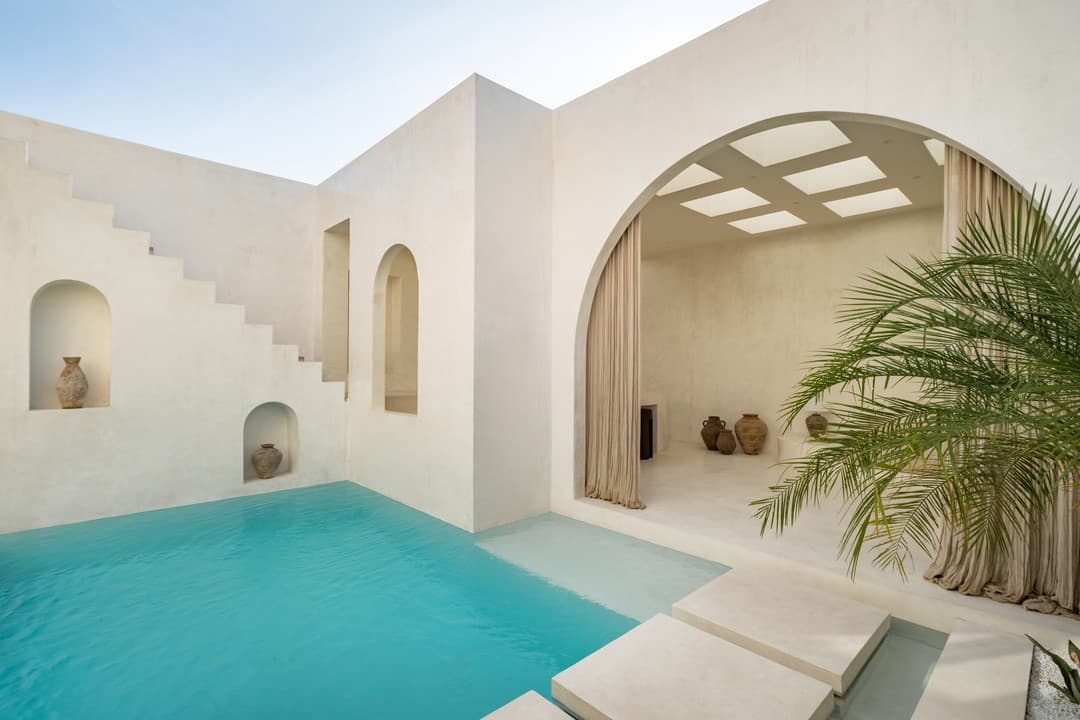
A producer does not book a villa because it is beautiful. They book because they have the answer to six questions, and because those answers hold up on shoot day. Photos bring the call in; these six answers turn it into a booking — or cost you half a day of back-and-forth for nothing.
1. Where the light falls, and when
This is the first question by a wide margin. A crew wants to know which rooms take the morning sun, which face west late in the day, and at what time the light turns hard or disappears behind the neighbouring wall.
A useful answer has times in it: "the living room faces due west, it takes light from 3 p.m. until sunset, around 6:15 p.m. at this time of year." A useless answer is "the villa is very bright."
The venue that answers best is the one that wrote down, once and for all, the orientation of each space and the window when it is at its best.
2. How the gear gets in
A production arrives with flight cases, stands, sometimes a generator. The question is not "is there parking" but:
- where a truck can park, and how far from the door;
- how many steps between the vehicle and the shooting space;
- whether the passage is wide enough for a cart;
- from what time unloading can start.
A thirty-metre path with six steps changes a crew's quote. Better they know before they come than on the morning itself.
3. How many outlets, and on which circuit
A shoot draws power: lights, chargers, a fog machine, sometimes air conditioning running all day. The number that matters is not how many sockets there are, it is what the circuit can carry.
What you need to be able to state: outlets per room, whether they share a circuit, and what trips first when everything runs at once. A crew that trips the board at 11 a.m. loses its morning, and your villa becomes "the one where the power doesn't hold."
4. What makes noise
Sound is the most common reason for cancelling after weather, and the most invisible in photos. The list of sources to declare is short and always the same: the road, the pool pump, the air conditioning, the neighbour's building work, dogs, and air traffic.
Two details beat a reassuring paragraph: what can be heard, and at what hours. A pump running from 8 to 10 a.m. is not a problem if it is announced — it is a problem if it starts during a sound take.
5. What may be moved
A crew always moves something. The real question is what, and how far:
| What gets moved | What to spell out |
|---|---|
| Light furniture | Yes, if everything is put back before leaving |
| Artwork, fragile objects | No, or stored away by you before they arrive |
| Plants, decoration | Yes, with a photo of the original set-up |
| Drilling, taping, hanging | Never without written approval |
A clear rule beats a blanket ban: the blanket ban gets worked around on site, the rule gets followed.
6. Who is on site, and what they can decide
The last question is a human one. A crew wants to know whether someone is present during the shoot, whether that person can open a locked room, grant an extra half hour, or switch off the pump.
A reachable contact who decides nothing slows the day down as much as no contact at all. Say who is there, on which number, and what they can approve without calling you.
Answer once, not ten times
These six answers do not change from one call to the next. Written down once in a tech sheet — orientation and light windows, access and steps, power, noise, what may be moved, on-site contact — they go out as one attachment and cut three rounds of email.
The real benefit is not the time saved: it is that the crew arrives knowing what to expect. A shoot that runs without surprises comes back, and it comes back with a rate grid already accepted — see How much should two hours of villa time cost?.